Music and Rhythm as Creative Play in the Kids’ Room

Music and Rhythm as Creative Play in the Kids’ Room
Music has a special way of sparking joy, curiosity, and movement – especially in children. In the kids’ room, music and rhythm can become a natural part of play, where imagination, coordination, and creativity come alive. It doesn’t take expensive instruments or musical training – just a willingness to explore sounds, movements, and moods together. Here’s some inspiration for how to bring music and rhythm into everyday life in a playful way.
Making Music Part of Everyday Life
Children respond instinctively to music. They dance, clap, hum, and quickly find their own rhythm. By making music a natural part of daily routines, you help strengthen their language development, motor skills, and ability to express themselves.
Start small: sing a cheerful good-morning song, tap out rhythms with spoons at dinner, or play a calm tune when it’s time to wind down. Music can help mark transitions throughout the day – from playtime to mealtime, from activity to rest – and helps children understand the rhythm of daily life.
Create a Musical Corner
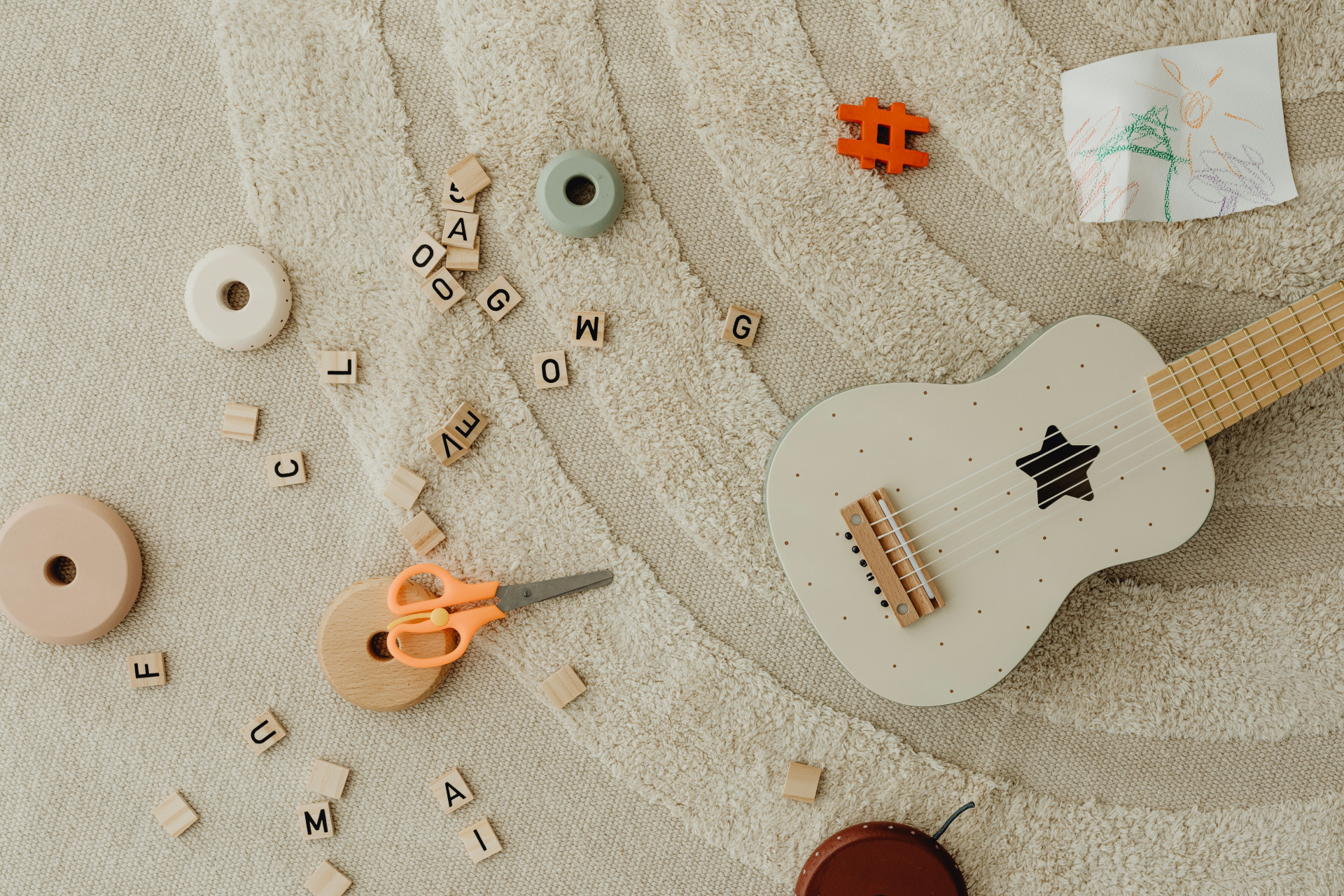
A musical corner in the kids’ room doesn’t need to take up much space. A small area with instruments that can handle enthusiastic play is enough to spark interest. Try including:
- A drum or tambourine – great for exploring rhythm and tempo.
- A xylophone or glockenspiel – perfect for experimenting with tones and melodies.
- A homemade shaker – fill a plastic bottle with rice or lentils.
- A saucepan and wooden spoon – simple, but always a hit.
The key is to let your child experiment freely. The music doesn’t have to sound “right” – it just needs to be fun.
Play with Rhythm and Movement
Rhythm is a natural part of children’s play. They jump, stomp, clap, and repeat movements in time. You can support this rhythmic play with simple activities that connect music and movement:
- Clapping games – create short rhythms together and see if your child can repeat them.
- Freeze dance – play music, dance, and freeze when the music stops. It’s great for focus and body control.
- Build rhythms with objects – use blocks, spoons, or pebbles to make different sounds.
These games strengthen listening skills, coordination, and cooperation – all while keeping play active and joyful.
Music as Creative Expression
Music is also a wonderful way for children to express feelings and moods. When a child plays fast and loud, it might show excitement or energy; when they play softly and slowly, it might reflect calm or thoughtfulness. Give your child space to choose the tempo and volume – and talk afterwards about how the music felt.
You can also combine music with other creative activities:
- Draw to music – let your child paint or draw while listening to different styles of music, and notice how colours and shapes change.
- Tell stories with sound – use instruments or household items to create sound effects for a story.
- Put on a “concert” – where the teddy bears are the audience and your child is the star performer.
When the Whole Family Joins In
Music and rhythm become even more fun when the whole family takes part. Create small rituals where you sing, play, or dance together. It doesn’t have to be perfect – it’s about connection and joy. Many parents find that musical play creates a special sense of togetherness, where everyone can let go and simply enjoy the moment.
If your child shows a strong interest, you can later explore local music classes or community workshops, but the most important thing is that music begins as play – not performance.
A Room Full of Sound and Imagination
A kids’ room with space for music and rhythm is a place where creativity and movement can flourish. Here, children can explore the world through sound, discover their own rhythm, and experience the joy of creating something themselves. Music becomes more than background noise – it becomes part of the magic of childhood play and learning.