Flexible Lighting in the Modern Kitchen

Flexible Lighting in the Modern Kitchen
Today’s kitchen is far more than a place to cook. It’s the heart of the home – a space for family gatherings, casual meals, homework sessions, and late-night chats over coffee. Because the kitchen serves so many purposes, lighting plays a crucial role. It needs to be functional, atmospheric, and flexible enough to adapt to every moment of daily life.
Layered lighting – the foundation of a well-lit kitchen
A well-designed kitchen rarely relies on a single light source. Instead, it’s about creating layers of light that work together to provide both practicality and ambience. General lighting ensures the room is evenly lit, task lighting provides precision where you need it most, and ambient lighting adds warmth and character when it’s time to relax.
- General lighting: Ceiling fixtures or recessed downlights that spread light evenly across the room. They make it easy to move around and see clearly.
- Task lighting: Focused illumination over benchtops, the stove, and the sink. Bright, neutral-white light is ideal here, as it helps you see colours accurately while cooking.
- Ambient lighting: Softer, warmer light that can be dimmed to create a cosy atmosphere. Think pendant lights over the dining area, wall sconces, or LED strips under cabinets.
When these layers are combined, your kitchen becomes both highly functional and inviting.
Flexibility through dimming and zones
One of the biggest advantages of modern lighting is the ability to adjust brightness and create zones. With dimmable fittings, you can easily shift from bright task lighting to a relaxed evening glow with the touch of a button. This flexibility allows the same space to serve multiple purposes without compromising comfort or style.
Consider dividing your kitchen into lighting zones – for example, one over the cooking area, one above the island, and another over the dining table. This way, you can control each zone independently and tailor the atmosphere to suit the occasion.
Smart lighting – technology that simplifies everyday life
Smart home technology has made lighting control easier than ever. With systems like Philips Hue, LIFX, or Google Home, you can adjust brightness, colour temperature, and even set schedules directly from your phone or with voice commands.
This not only adds convenience but also helps save energy. You can program lights to dim automatically in the evening or turn off when no one is in the room. Many Australians are also embracing tunable white lighting, which lets you switch from cool white for cooking to warm amber tones for dining – all from the same fixture.
Design and materials – when lighting becomes décor
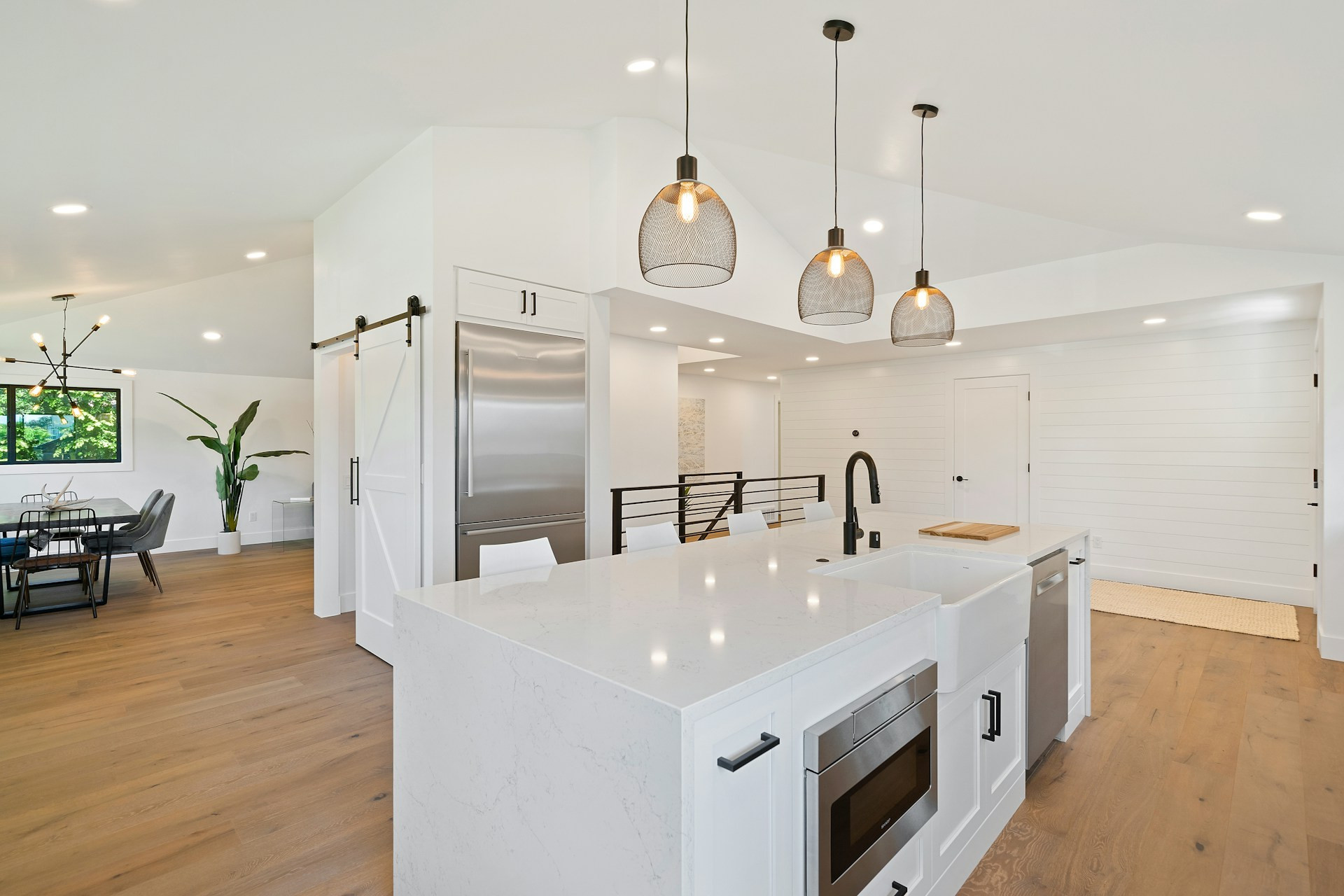
In the modern kitchen, lighting is as much about style as it is about function. Pendant lights in glass, metal, or natural materials can highlight your kitchen’s design and add visual balance. A row of small pendants above an island creates both light and character, while a statement pendant over the dining table can serve as a focal point.
LED strips under cabinets or along kickboards add a subtle, contemporary touch and can highlight the kitchen’s architecture. Choose fixtures that complement your cabinetry and finishes – and don’t be afraid to mix textures and tones for a lively, layered look.
Lighting that follows your daily rhythm
More homeowners are now choosing lighting that supports their natural body clock. In the morning, cool, energising light helps you wake up, while in the evening, warm, dimmed light encourages relaxation. This concept, known as human-centric lighting, can enhance wellbeing and make your kitchen feel more in tune with the rhythm of the day.
Getting started
If you’re planning to upgrade your kitchen lighting, start by mapping out how you use the space throughout the day. Where do you cook? Where do you eat? Where do people tend to gather? From there, you can decide where to place task lighting and where to add softer, ambient light.
- Choose LED fittings for energy efficiency and long lifespan.
- Ensure task lighting has a high colour rendering index (CRI 90+).
- Opt for dimmable or smart fixtures for maximum flexibility.
- Think holistically – your lights should work well both individually and together.
With thoughtful planning, you can create a kitchen that’s practical, welcoming, and full of atmosphere – perfectly suited to the Australian lifestyle, from bright summer mornings to cosy winter evenings.