Enchanted Walls: Create Magic in Your Child’s Room with Wall Murals

Enchanted Walls: Create Magic in Your Child’s Room with Wall Murals
A child’s room is more than just a place to sleep – it’s a world where imagination, play, and comfort come together. With a wall mural, you can transform the space into a wonderland where your child can dream of jungles, starry skies, or castles in the clouds. A mural can set the mood, inspire creativity, and give the room a personality that grows with your child. Here’s how to bring a touch of magic to your walls – whether you’re painting it yourself or working with a professional.
Why Choose a Wall Mural?
A mural offers depth and atmosphere that wallpaper or posters can’t quite match. It can be calm and soothing – like a soft sky with drifting clouds – or vibrant and full of life, featuring animals, planets, or fantasy scenes.
For children, a mural helps create a space that feels truly their own. It can also encourage learning and play: a map of Australia, an underwater reef scene, or a forest filled with native animals can be both decorative and educational.
A mural can also evolve as your child grows. A neutral background with a few playful details can easily be updated later with new colours or themes.
Find the Theme – Together with Your Child
The best starting point for a mural is your child’s interests. Maybe they love the ocean, outer space, or Australian wildlife? Involving your child in the creative process not only makes the result more personal but also turns it into a fun family project.
Here are some popular themes:
- Nature and animals: Australian bush scenes, koalas, kangaroos, or sea creatures from the Great Barrier Reef.
- Adventure and fantasy: Castles, dragons, superheroes, or magical landscapes.
- Space: Planets, rockets, and constellations – perfect for curious explorers.
- Calm and dreamy: Clouds, mountains, or abstract shapes in soft tones for a peaceful atmosphere.
Think about how the theme fits the room’s size and light. A large, detailed mural might overwhelm a small space, while a simple, airy design can make it feel bigger.
Getting Started
You don’t need to be an artist to create a beautiful mural. With a bit of planning and the right materials, you can achieve a stunning result.
- Sketch your idea. Draw the design on paper first to plan proportions and colours.
- Transfer the design. Use a pencil, projector, or stencils to outline the shapes on the wall.
- Choose safe paint. Opt for water-based acrylic or low-VOC wall paint – especially important in children’s rooms.
- Work in layers. Start with the background and build up the details gradually.
- Add finishing touches. Small brushstrokes, shadows, and outlines bring the mural to life.
If painting isn’t your thing, there are many talented Australian mural artists who can help bring your vision to life. You can also mix hand-painted elements with removable wall decals for a flexible look.
Colours That Set the Mood
Colours influence mood and energy, so it’s important to find the right balance between stimulating and calming tones.
- Blues and greens create a sense of calm – ideal for sleeping areas.
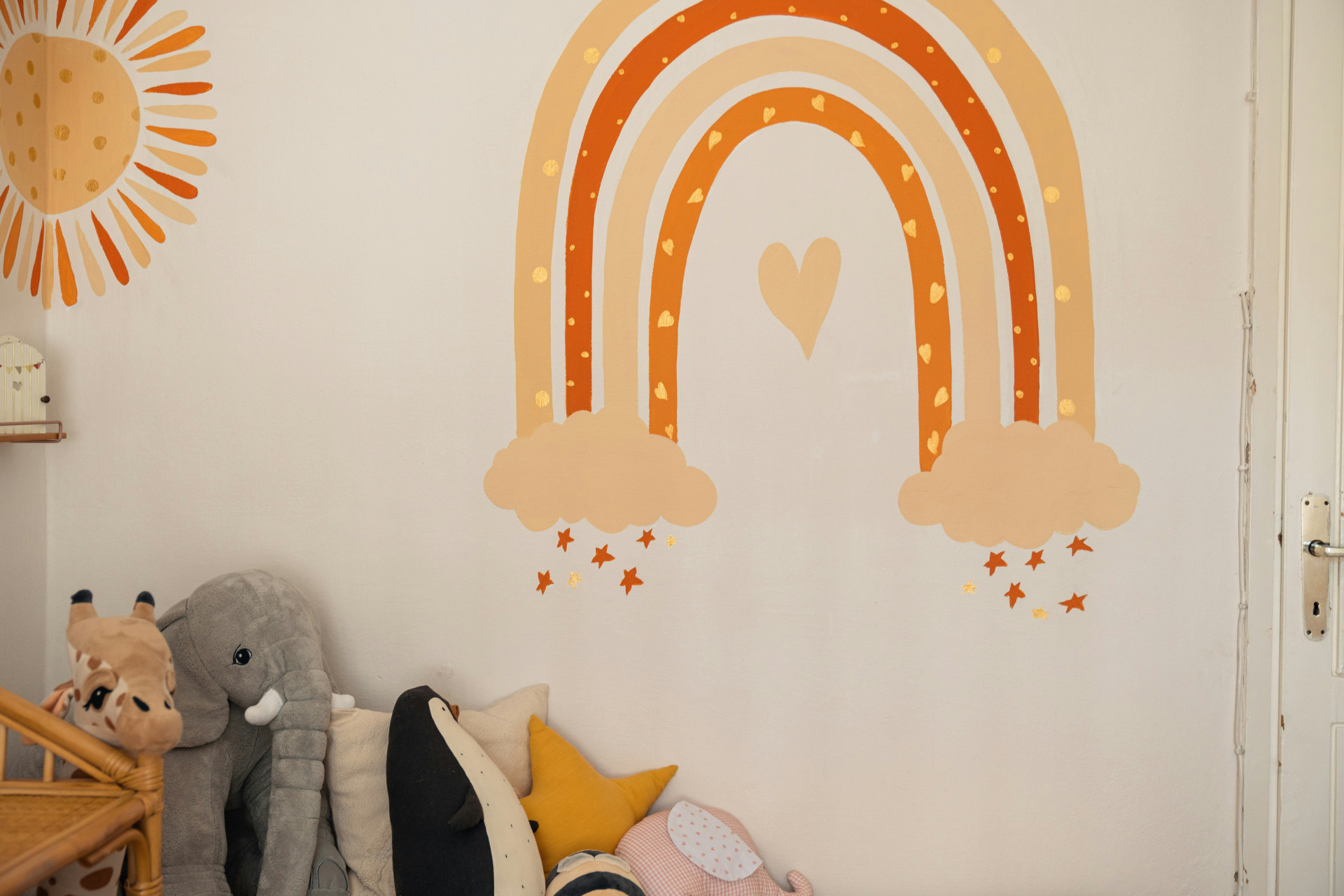
- Yellows and oranges bring warmth and joy – great for play zones.
- Pastel shades offer a soft, harmonious feel that won’t overpower the space.
- Contrasts can highlight details, but avoid too many bold colours at once.
Consider how the mural’s colours work with furniture, fabrics, and lighting. The mural should complement the room, not dominate it.
Make It Personal
A mural becomes truly special when it reflects your child’s personality. You could include their name, favourite animal, or small symbols that hold meaning for your family.
Let your child paint a small part – maybe a star, a leaf, or a tiny creature. It gives them a sense of ownership and makes the room even more personal.
As Your Child Grows
Children’s interests change quickly, but that doesn’t mean the mural has to disappear. You can refresh it with new colours, add details, or paint a new design over the old one. A mural can grow with your child – from imaginative playtime to a more mature, stylish space.
Create a Room That Tells a Story
A wall mural is more than decoration – it’s a story on the wall. It can spark play, bring calm at bedtime, and give your child a space where imagination runs free.
Whether you choose a simple motif or a whole fantasy world, the goal is to create a room where your child feels at home – and where everyday moments are touched by a little bit of magic.