Dark walls without a dark room – here’s how to do it

Dark walls without a dark room – here’s how to do it
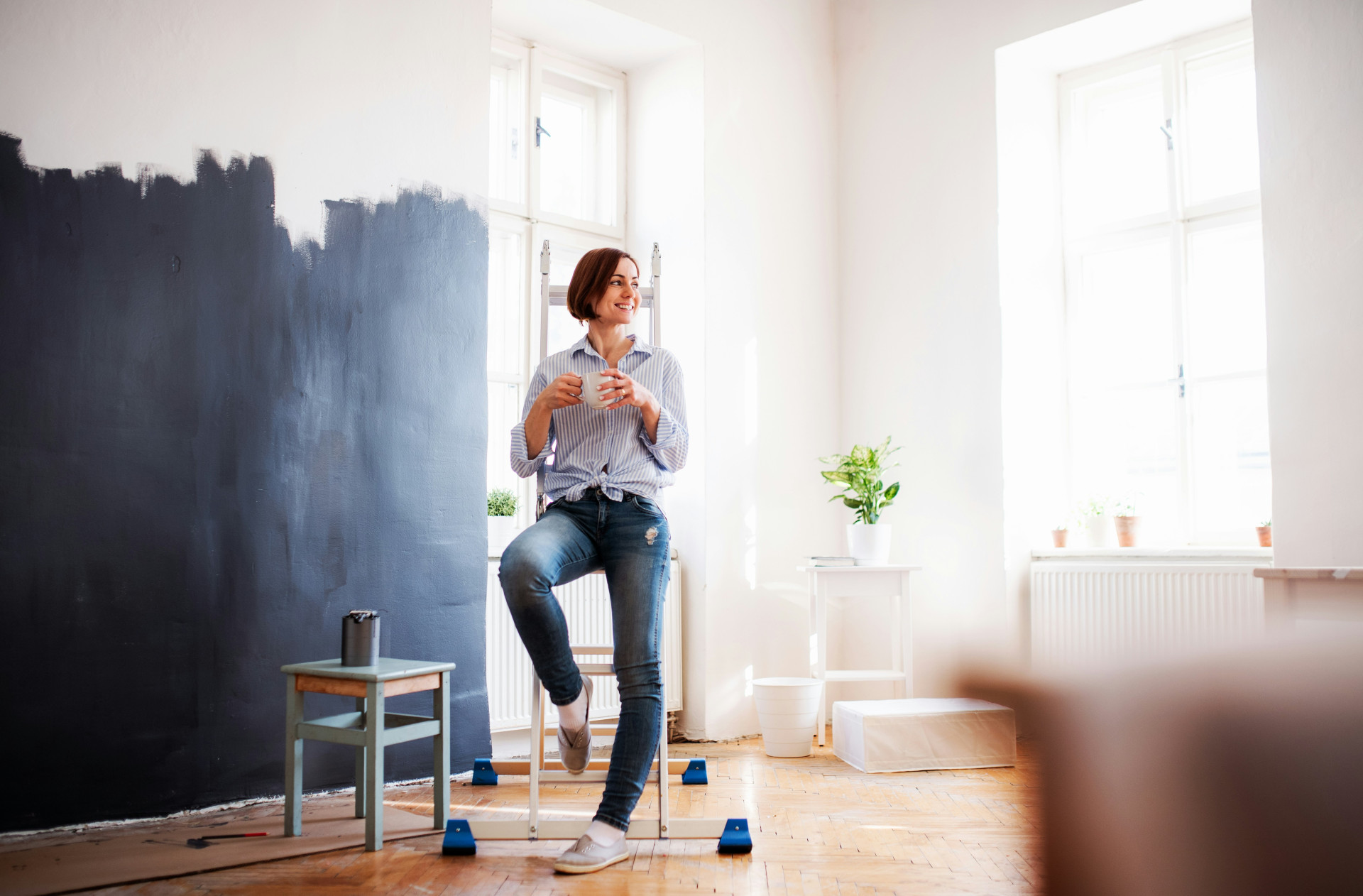
Dark walls can bring depth, calm and character to a space – but many people hesitate, worried that the room will end up feeling small or gloomy. The good news is, it doesn’t have to. With the right colours, materials and lighting, you can create a space that feels both inviting and open, even with dark walls. Here’s how to make it work in your Australian home.
Choose the right shade
When picking a dark colour, it’s not just about how dark it is, but also about its undertones. A cool charcoal might feel more closed in than a warm olive or earthy brown that reflects light softly.
- Warm dark tones (like deep olive, chocolate brown or terracotta) create a cosy, enveloping feel.
- Cool dark tones (like navy or slate grey) look elegant and calm but often need more light to avoid feeling heavy.
- Matte over gloss – matte paint absorbs light and gives a soft, calm surface, while semi-gloss reflects light and can add energy to smaller rooms.
A great trick is to paint a sample board and move it around the room throughout the day. You’ll see how the colour changes in different light – especially important in Australia, where natural light can be strong and warm.
Light is everything
Dark walls need thoughtful lighting. It’s not just about brightness, but about layering light to highlight the room’s shape and colour.
- Ceiling lights provide general illumination but should be complemented by other sources.
- Wall and floor lamps add depth and highlight the wall colour.
- Accent lighting – such as a lamp directed at artwork or a plant – brings life and variation.
- Warm bulbs (around 2700–3000 kelvin) make dark colours feel more comfortable and inviting.
Make the most of natural light. Use sheer curtains to let sunlight in while softening glare, and add mirrors or metallic accents to bounce light around the room. In many parts of Australia, the sunlight is strong enough that even dark walls can feel bright during the day.
Create contrast and balance
To keep the room from feeling heavy, balance dark walls with lighter elements, textures and materials.
- Light ceilings and floors add airiness and contrast.
- Natural materials like timber, linen and rattan bring warmth and texture.
- Metal and glass reflect light and break up dark surfaces.
- Plants add freshness and colour contrast – and thrive in bright Australian light.
A dark room doesn’t have to be monochrome. Try painting trims, doors or one wall in a lighter tone to create variation and visual interest.
Use furniture and textiles strategically
Furniture and fabrics play a big role in how a dark room feels. Choose pieces that either blend in for a calm look or stand out for contrast.
- Furniture in similar tones to the wall makes the space feel larger by blurring boundaries.
- Light furniture adds freshness and draws the eye away from the walls.
- Textiles with texture – like wool, velvet or cotton – add depth and make the room feel more inviting.
Dark walls can also handle bold colours in small doses – think cushions, artwork or a statement vase to break up the uniformity.
Think about the room’s purpose
Dark walls don’t suit every space, but they can transform the right one.
- Bedrooms feel calm and cocooning.
- Living rooms become more intimate and relaxing.
- Entryways can feel welcoming when paired with good lighting and mirrors.
In small rooms, painting both walls and ceiling in the same dark shade can create a cosy, unified feel. In larger spaces, try one or two dark feature walls to add depth without overwhelming the room.
Make it personal
Dark walls work best when they reflect your personality. Combine them with art, books, plants and personal treasures so the space feels lived-in rather than styled.
A dark room can be dramatic or serene – it all depends on how you decorate it. The key is to experiment and find the balance that feels right for you and your home.